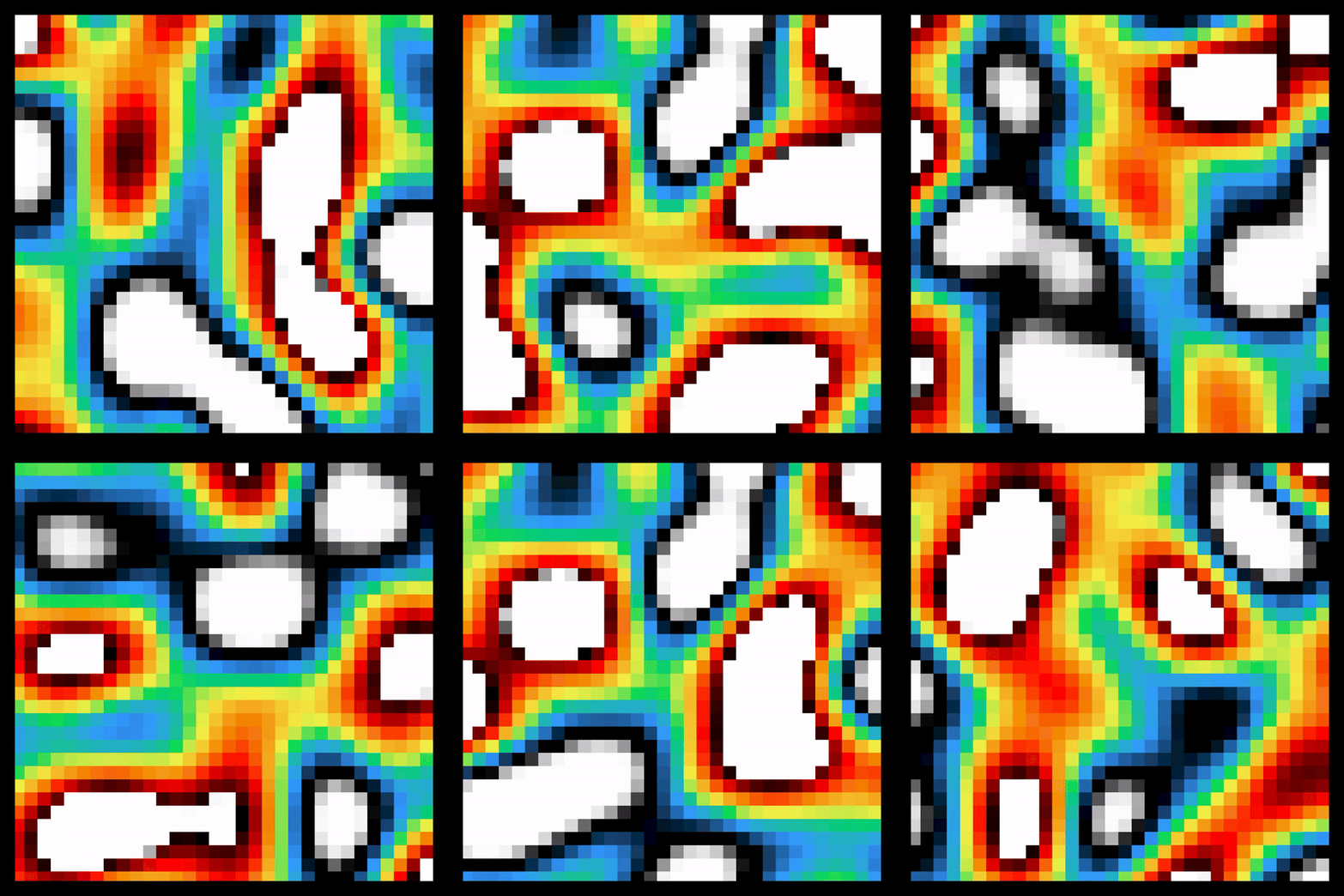


As an exam project for my class in Game Audio at Sonic College, i was tasked in creating a short game completely independently using Unity. I knew early on i wanted a game based around an everyday job like garbage collecting or mail delivery. Before starting development on the final idea, i tried some diffrent concepts aswell.
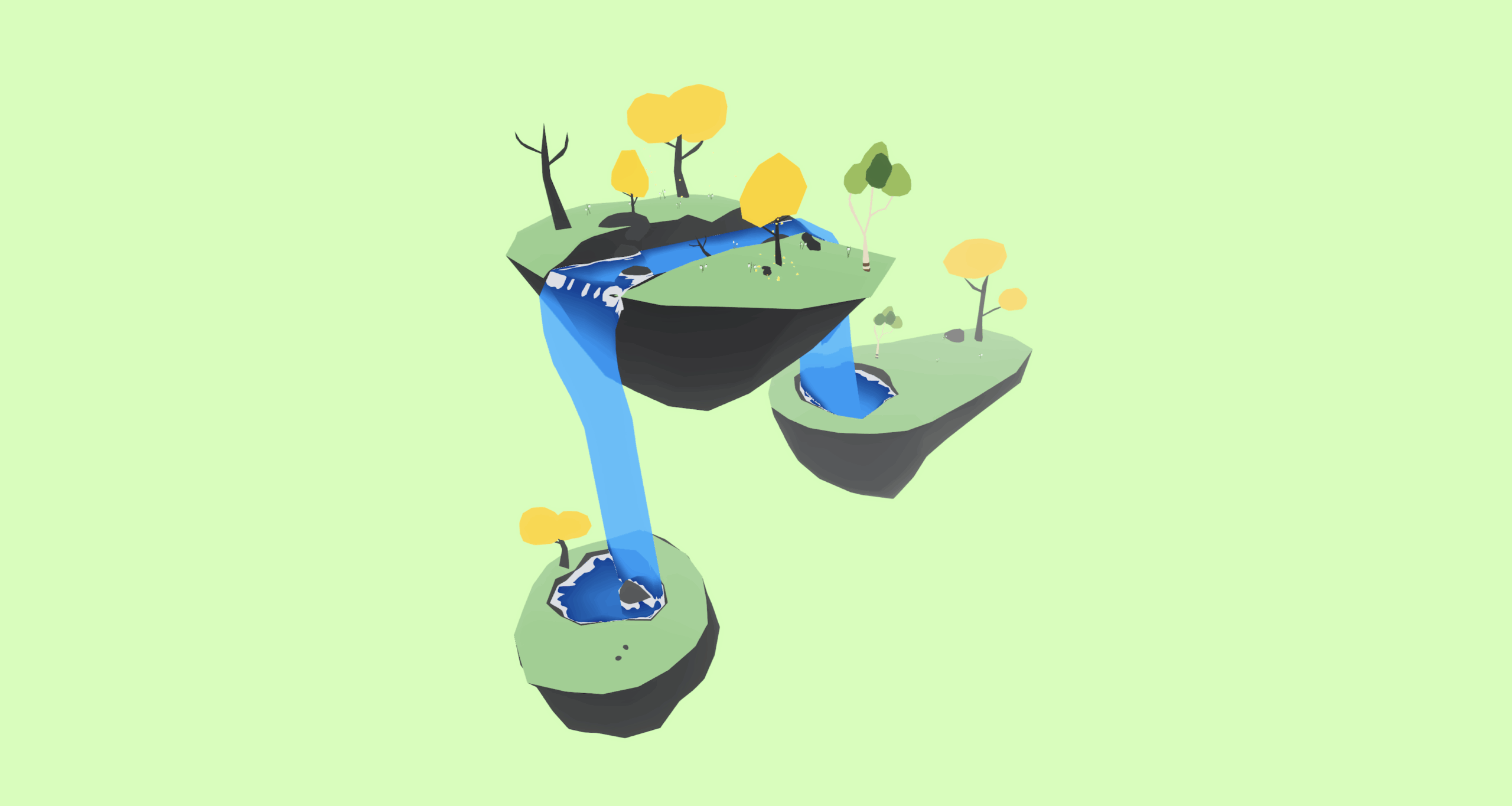
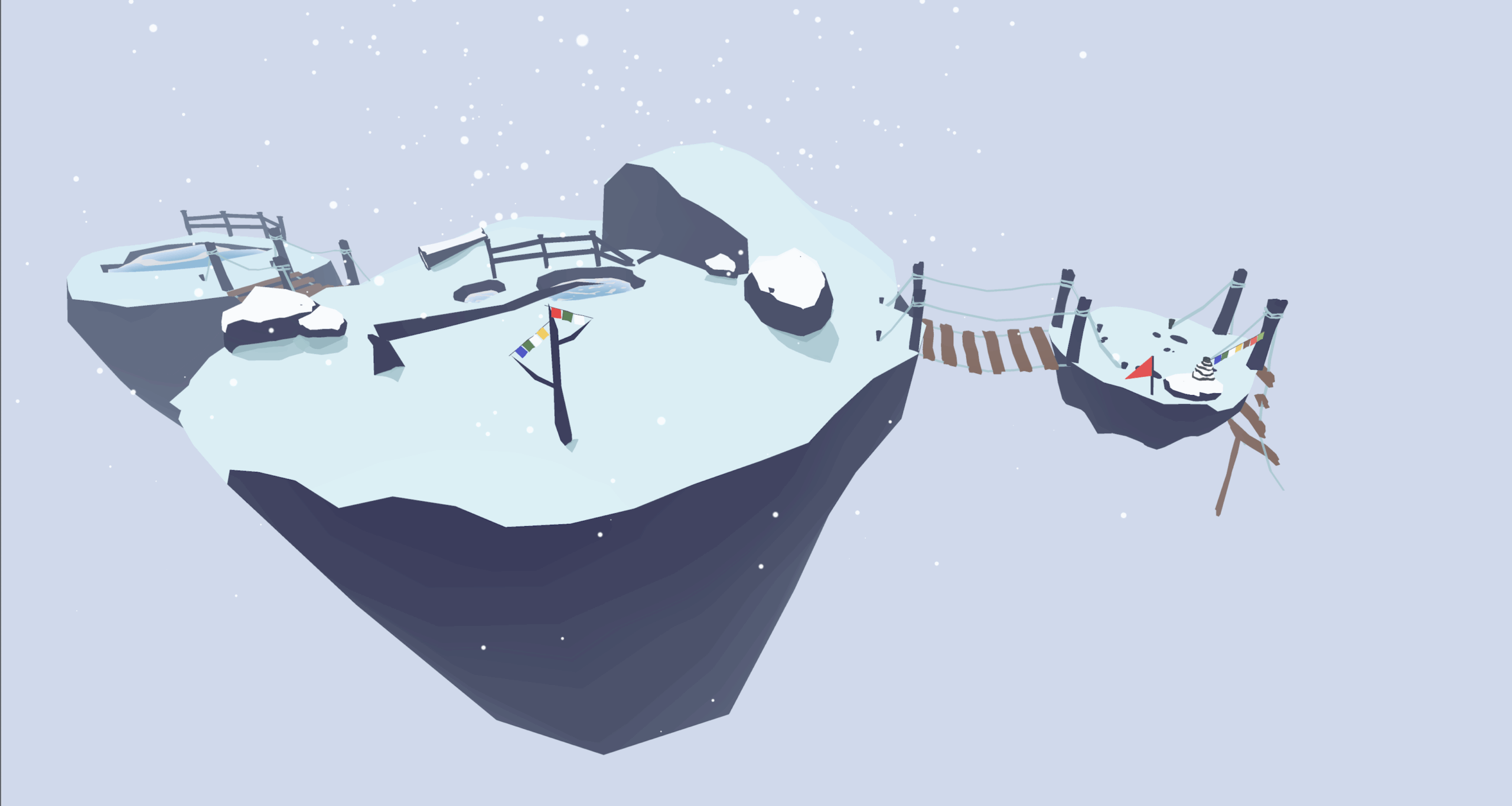
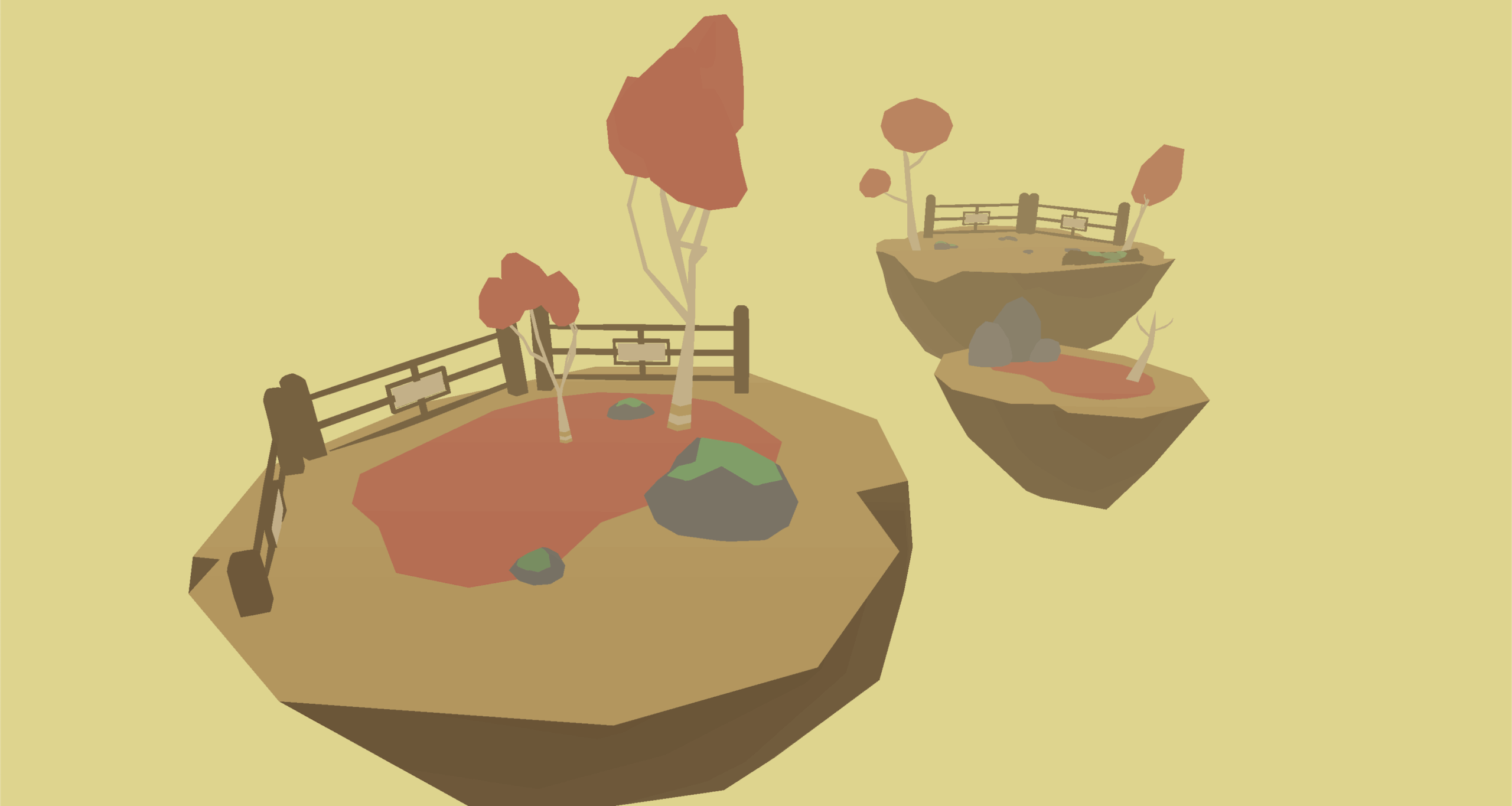
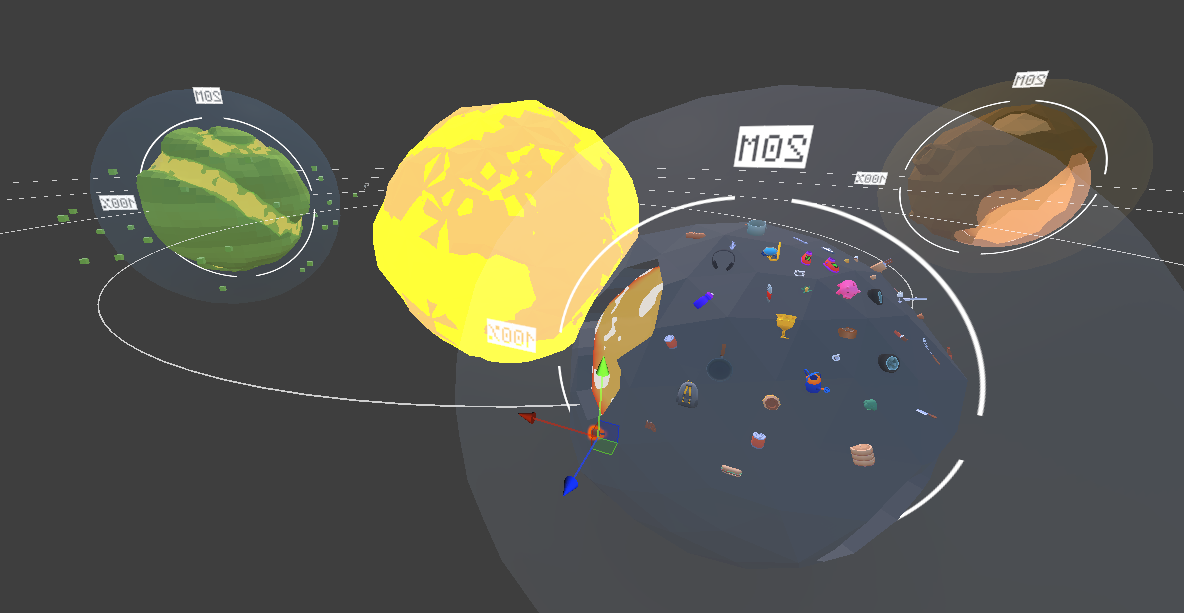
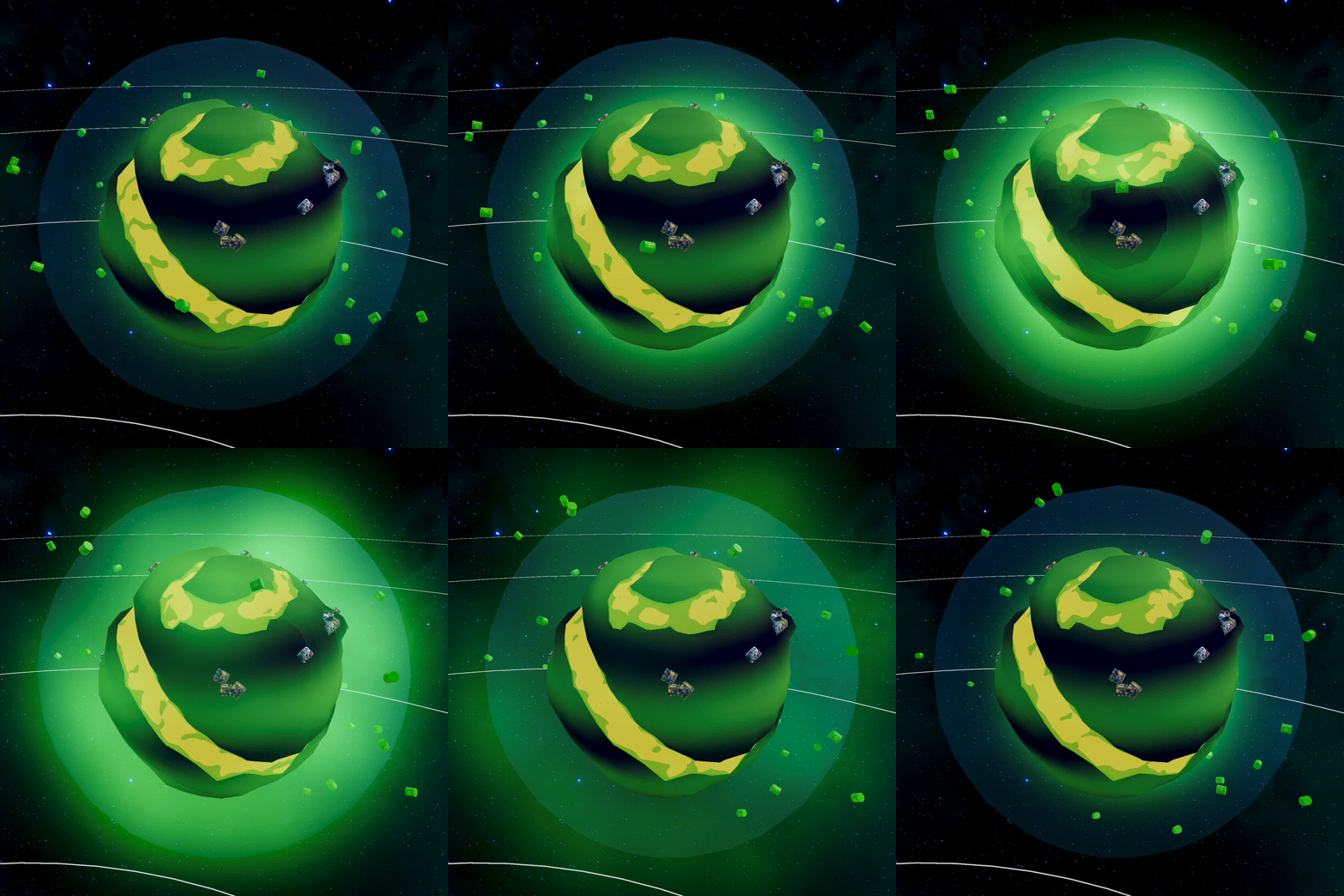
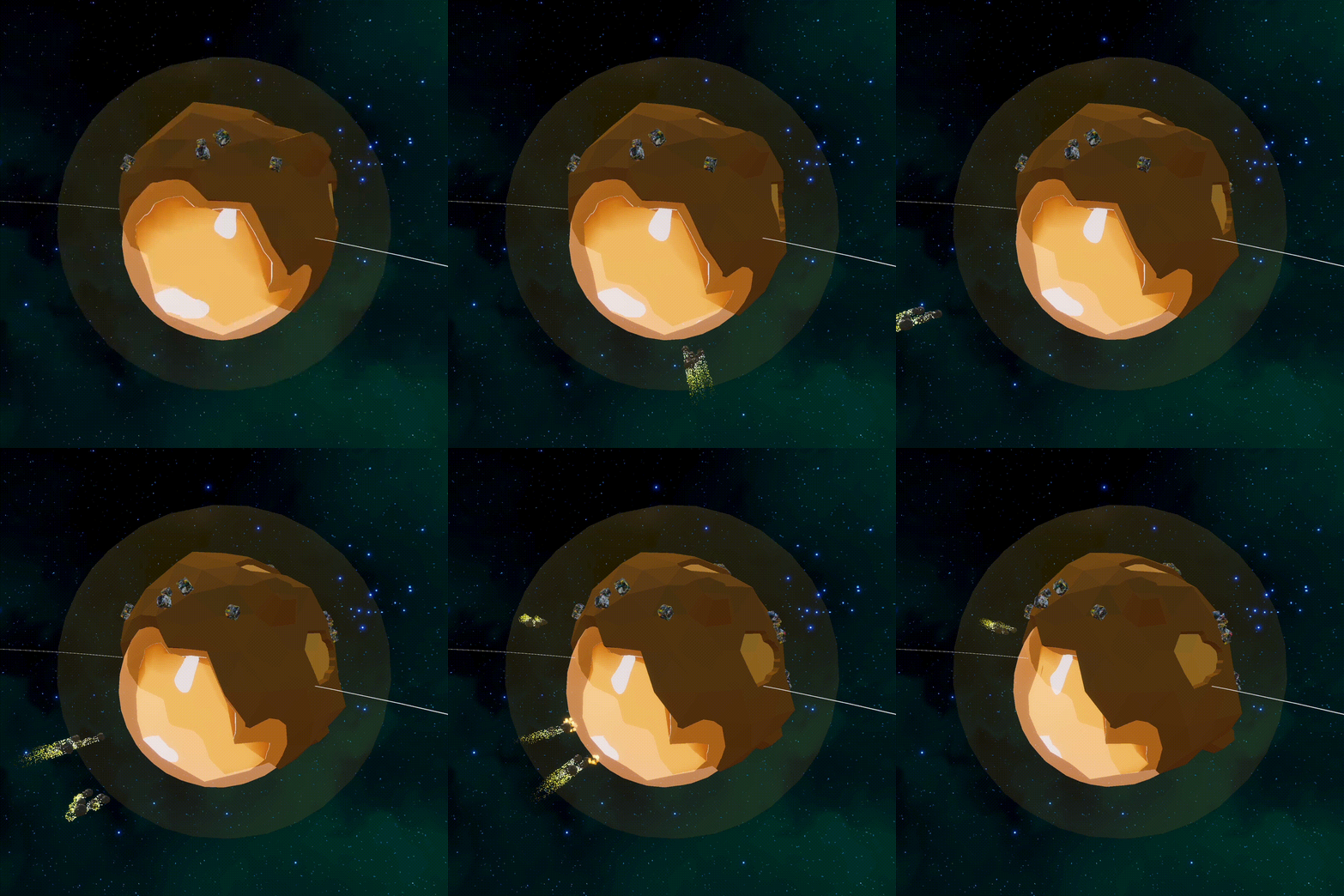
A few stills from in-engine concepting for a game about a world split into isolated pieces, where you play as messenger and “bridge-builder” trying to connect the world.
Early on i learned that creating a concept based on a simple idea and working out gameplay before worldbuilding, proved to be a much smarter approach. So for my game i took inspiration from a few games, with fun simple mechanics.
Katamary Damacy
(2004)
I wanted to make a game about something as simple as vaccuming. Katamari was a great example for learning what can make a simple mechanic fun
Spacelines From The Far Out
(2022)
Early on i wanted to have it be a simple mission of collecting trash, but asteroids, fuel management and time making it more engaging
These two were the main source of inspiration, along with the atmosphere of Outer Wilds (2019) and menial task fun from Powerwash Simulator (2022). The main focus was having simple to learn controls that felt natural and slighty arcadey, a sparse but atmospheric galaxy to roam, and getting the mecahnic of vaccuming trash to feel fun and rewarding.
Early effort to make the trash more varied, represeting real or alien items. This turned out to feel annoying when vaccuming due to size and amount needed to feel cluttered. So this instead turned into small Wall-E looking cubes.
My vision early in the sound-design process was to lean into the garbage aspect of the game. For both ambience, SFX, music i used a self-recorded library of me playing with trash found in my kitchen. This proved very useful for the basis of the sounds, but to fit the quirky sci-fi aesthetic i layered all sounds with synthetic noises.
Since my trash were multicolored cubes and not trash-like props, the sound was very essential to prove what the objects were.
Something to notice in the video is the two-fold sound of collecting, which is sucking up the trash and that effectively spawning vegetation. For the spawning sound i used a vibrating ruler to match the wobblyness of the plants growing.
Video showcasing the recording and final version of the garbage SFX.
The main dynamic ambiences besides the backdrop of the galaxy, is the planets. In designing the game I hadn’t taken to count the weird hurdle of having my ambiences resonating from spheres instead of the usual planes. Usually I would have made a 2D ambience with 3D objects giving the scene life, but here I wanted it to be obvious that all ambience was emitting from the planets core.
The solution to my problem turned out easy since FMODs 3D sound emitters are already spherical. I made large emitters with sound size and min extent matching the planets size, and used that system for the planets core ambience. To make the planets more intersting to traverse I gave each planet a dynamic element:
Thor: Bubbling and sizzling pools of lava emitting with the sound of me boiling rice.
Zeus: Loose asteroids swarming around the planet, making it hard to enter orbit.
Acai: Clusters of toxic waste that will move towards and damage you, and rivers flowing with acid.
Omus: Meteors crashing towards the planet and exploding, keeping you on your toes while vacuuming.
All That Is Left turned out to be a very simple game. I knew i wanted a kind of sandbox/open nature to the gameplay, where you choose where to travel and what to upgrade. This left little room for linear story-telling or progression, so instead opted for a semi-linear approach. You choose the order of planets you visit, but the end result will always be same. Either you die or you get a second task telling you to vacuum the solar system.
To embrace the semi-linear structure, i made the music change accordingly to your progression. I tried doing vertical mixing, but found that you never spend enough time with the music to hear mix changes. Therefore i turned to changing the score completely when having vacuumed 2 planets and 4 planets. This lets the player know they are going in the right direction. Each piece of music is played using a generative system build in FMOD. Here is a showcase of the second theme and how it’s build.
Each theme has two parts. One part plays when you are out of orbit and exploring, the second when in orbit and vacuuming. This felt a like very natural dynamic shift for the music to embrace. Exploring is ambient, mysterious and calming. In contrast, being in orbit contains drum machine grooves and more engaging elements.
Because the transition going in and out of orbit is very quick and non-dramatic, i didn’t want to use a big musical stinger to cover it up. I instead used FMODs built-in transition system to crossfade between both parts, layered with a tiny drum fill. When going in and out of orbit the ambience of the planet also changes using filters, stereo size and horizontal mixing, along with layers of noise, bubbles and water splashes making it feel like you’re breaking through the atmosphere.
Having reflected on the game for a few months, I feel very proud of my work done. It might not include all the features I had planned and caused me some headaches, but i learned just how tough and fun creating a game from scratch can be. Having to do everything yourself, in a short amount of time caused me to really focus and commit to ideas. The project in its final form is like a really fun and more detalied version of a flash game.
Thanks a lot for reading my thoughts on the creation of All That Is Left. Make sure to download and play it yourself by visiting the link below.